

You’ve found the perfect job listing, you’re ready to hit “Apply,” and then – uh-oh! Do they want a resume? A portfolio? Or maybe both? You’re not alone in feeling confused. The difference between portfolio and resume might initially seem confusing, but each serves a unique purpose.
Don’t worry; we’ll explain everything and clear up the “portfolio vs resume” mystery so you can send in the right material and get one step closer to landing that dream job.
What’s the Difference Between Portfolio and Resume
What is a Resume?
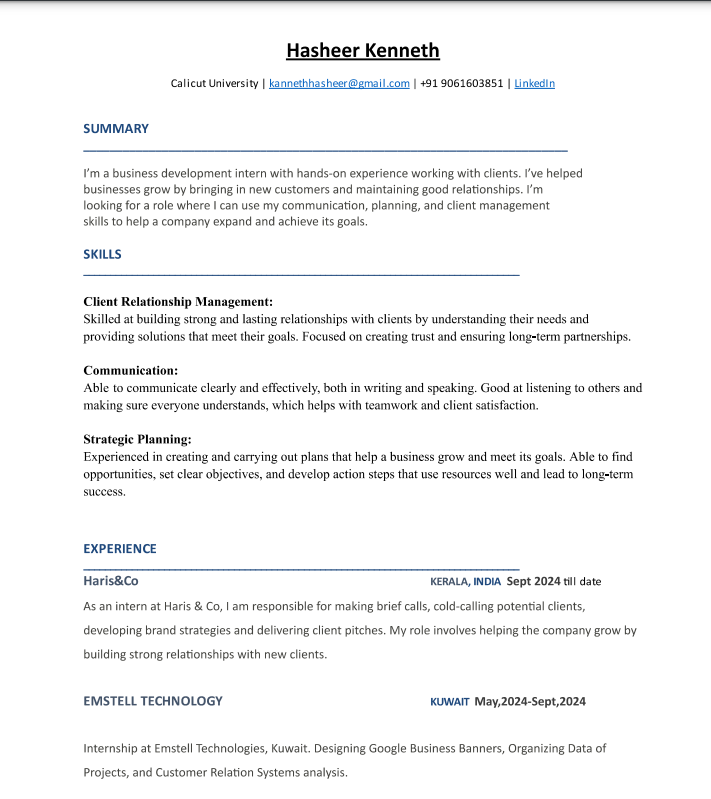
A resume is a brief summary of your work, experience, skills and education. Think of it as a glance at your career journey up until now. Resumes are typically expected in almost every job application and help employers quickly understand your qualifications.
Resumes are brief, concise and to the point, designed to give recruiters a summary of your background in just a glance.
Key Elements of a Resume:
Contact Information
Your name
Email
Phone number
LinkedIn profile
Work Experience
Job titles
Companies
Dates of employment
Key achievements
Education
Degrees/ Relevant Certifications
Skills
Hard skills
Soft skills
Also Read: The Ultimate Guide To Create Resume For Freshers

What is a Portfolio?
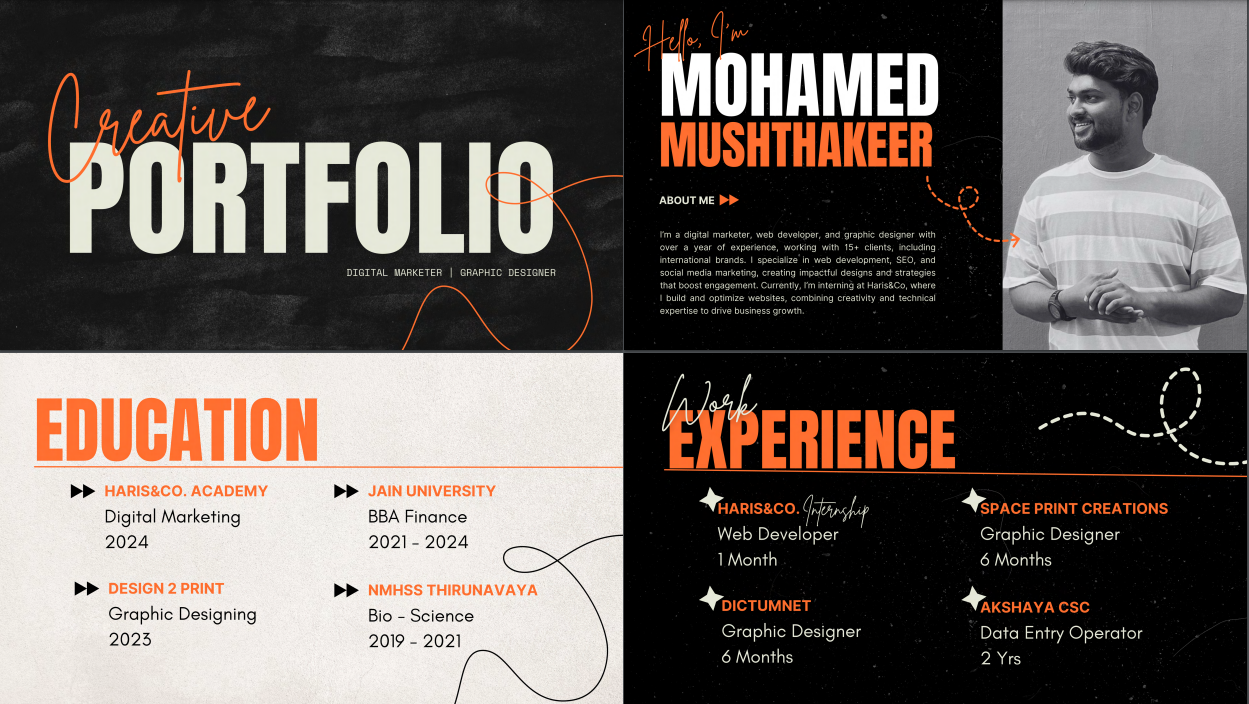
While a resume tells potential employers about your experience, a portfolio shows them what you can do because it is a visual collection of what you have done so far and showcases your best work.
Portfolios are ideal for professions like content writing, graphic design, photography, marketing, and more. A good portfolio helps showcase your abilities through examples, strengths, and accomplishments.
Key Elements of a Portfolio:
Sample of Your Work
Examples that showcase your skills and versatility
Case Studies
Detailed descriptions of projects
Your approach
Result
Personal Statement
A brief introduction explaining your personal philosophy or creative style
Links to Relevant Work
Blogs
Websites
Social media profiles where applicable
Also Read: How to Build a Digital Marketing Portfolio
The Core Difference Between Portfolio and Resume
The fundamental difference between portfolio and resume lies in their presentation and purpose. While the resume is a concise document focused on summarising your qualifications, the portfolio is a showcase of your actual work.
The “portfolio vs resume” comparison is important if you’re in a creative field. Employers often want to see evidence of your skills rather than just read about them. Here’s a breakdown to help you see the difference more clearly.
Aspect | Resume | Portfolio |
| To summarise qualifications briefly | To display examples of your work |
|
| Can vary significantly |
|
| Samples, case studies, and achievements |
|
| Creative and visual professions |
| Quick overview for busy recruiters | Detailed insights into your capabilities |
When Do You Need a Portfolio Instead of a Resume?
If you’re applying for roles in fields like writing, design, art, or digital marketing, a portfolio is essential to demonstrate your creative side. Meanwhile, if you’re in a more traditional role like finance or administration, a resume alone is usually enough.
Situations When a Portfolio Shines:
Creative Jobs
Graphic Design
Content Writing
Illustration
Art/ Photography
Freelance Work
Project-Based Roles
Why Understanding the Difference Between Portfolio and Resume Matters
Many job seekers send either a portfolio or a resume because they are unaware of the difference between portfolio and resume and this can result in missed opportunities, especially if a job listing specifies the need for both.
A resume gives recruiters a way to evaluate your background quickly.
A well-crafted resume is important for Applicant Tracking System (ATS), which screens applications based on keywords and qualifications.
Portfolios allow hiring managers to understand your work, skills and how you approach tasks.

Portfolio vs Resume: Do You Need Both?
In some cases, having both is ideal. Certain applications may require a resume but also invite candidates to attach a portfolio. If you’re not sure what to include, here are some tips:
When in Doubt, Attach Both
If it’s a creative role and there’s no clear instruction, sending both a resume and a link to your portfolio shows you’re thorough and professional.
Always Follow the Instructions
If the job description merely calls for a resume, follow that. Overloading recruiters with unnecessary information can sometimes backfire.
Tailor Your Portfolio
If you’re including a portfolio link in your resume, tailor your portfolio to reflect the job description, choosing relevant samples that align with the company’s needs.
The Best Way to Include Your Portfolio on Your Resume
Including your portfolio in your resume can be a smart way to make both documents work together effectively. Here’s how to do it without cluttering your resume:
Add a Portfolio Link: At the top of your resume near your contact information, include a link to your online portfolio or a PDF version. You could use a URL shortener to keep it tidy.
Choose Relevant Work Samples: Ensure that the work in your portfolio matches the skills and experiences you highlight on your resume.
Mention Projects in Your Work Experience: In the work experience section of your resume, briefly mention key projects and direct employers to your portfolio for full details.
Final Thought
Understanding the difference between a portfolio and a resume is essential for presenting yourself effectively to potential employers. While a resume provides a quick, structured summary of your qualifications, a portfolio showcases tangible examples of your skills and achievements. Together, these tools can give you an edge in the job market, especially in creative fields.
Ready to create a standout portfolio and resume that truly represents your skills? Join our Digital Marketing Course today and build a powerful professional profile because our digital marketing Course empowers you to “Breathe Portfolio” by working on real projects for actual clients. With us, you’ll build a portfolio that not only stands out but also helps you reach your career goals.
Join us to start crafting a portfolio!
