

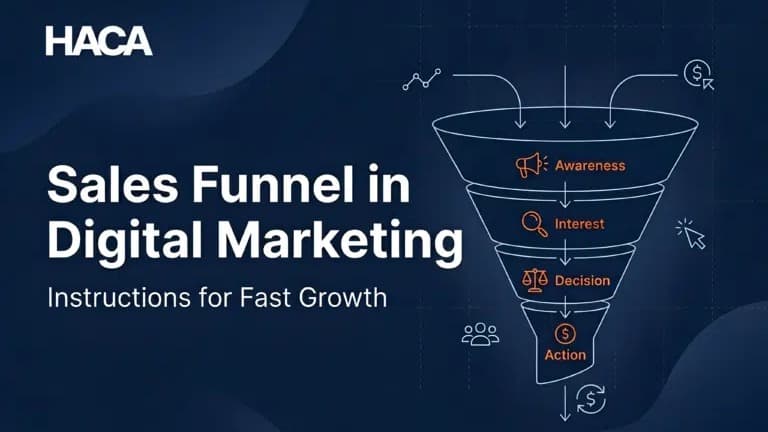
Having a great product or service isn’t enough to succeed in today’s fast-paced online world. Even the best ideas won’t reach their full potential if customers can’t easily find their way from first hearing about you to becoming a loyal fan. This is where a sales funnel in digital marketing comes in. It’s more than just a marketing term; it’s a smart plan that guides potential customers through every step of their journey with your brand, from their very first look to buying your product and staying with you long-term. Generally, this journey is broken down into three main parts:
Top-of-Funnel (ToFu) where people first become aware of your brand
Middle-of-Funnel (MoFu) where they consider your solutions,
Bottom-of-Funnel (BoFu) where they make a purchase.
Think of a modern sales funnel not as a straight line, but as a smart system . At the top, many people are just discovering your brand. As they move through the system, they become more interested, learn more about what you offer, and become more likely to buy. The main goal is to help as many people as possible move through each step, turning casual visitors into loyal customers who keep coming back. For businesses looking to grow quickly and steadily, understanding and improving this process isn’t just a good idea, it’s essential.
Understanding the Digital Marketing Funnel Stages Deeply
To really make the most of a sales funnel today, we need to look beyond the old three-step model. How customers buy things in 2026 is more complex, needing a plan that uses data, artificial intelligence (AI), and personal touches
Top-of-Funnel (ToFu), Middle-of-Funnel (MoFu), and Bottom-of-Funnel (BoFu).
Each stage requires a different approach and a unique set of content to nurture leads effectively.

1. Top-of-Funnel (ToFu): Awareness
This first and broadest step is all about reaching a lot of the right people. The main goal is to make your brand visible and introduce yourself to those who are just starting to think about a problem or topic related to what you offer, without trying to sell directly.
Content Strategy (What to Share): Content here should teach, entertain, and be truly helpful, without pushing sales too hard. This includes blog posts that answer common questions, engaging social media posts, easy-to-understand pictures (infographics), and helpful videos. The focus is on giving value and showing your brand as a trustworthy source
Key Metrics (What to Watch): Look at things like how many people visit your website, how many people you reach on social media, and how often your brand is mentioned. The goal is to be seen by more people and bring new visitors to your online doorstep.
2. Middle-of-Funnel (MoFu): Consideration
Once people know about you, the next step is to keep them interested and get them involved. At this point, they’re aware of your brand and starting to look for more information.
Your content should help them understand their problems better and hint at how you can help.
Content Strategy (What to Share): This means content that encourages people to interact and explore more. Reports on industry trends, blogs that solve problems and pain points, detailed infographics, how-to videos, and free tools or calculators work very well. AI tools like ChatGPT or Jasper can assist in generating contextual content ideas
Key Metrics (What to Watch): Keep an eye on how much people interact with your content, how long they stay on a page, how often they share your posts, and their first interactions with any interactive parts. (e.g., HubSpot AI, Salesforce Einstein) can prioritize engaged users.
Social Proof & Trust Building (Why They Should Believe You): Before buying, customers need to feel confident and sure about their choice. This step is all about building trust and easing any doubts by showing off the good experiences of others.
Content Strategy (What to Share): Focus on content that builds trust, such as success stories with clear results, video reviews from happy customers, mentions in the news, and any awards or certifications you’ve received
Key Metrics (What to Watch): Track review scores, how many people watch customer testimonials, and how much engagement your success stories get. AI tools can also help you understand what people are saying about your brand online. AI analytics tools (e.g., Sprinklr AI, Brandwatch) can monitor sentiment across channels
3. Bottom-of-Funnel (BoFu): Conversion
After you’ve got their interest, people move into the consideration phase, where they’re actively looking at different solutions. Your job now is to build trust and show them why your product or service is the best fit for their specific problem.
Content Strategy (What to Share): Content should be more focused on solutions. This includes free guides (like e-books), detailed success stories (case studies), online workshops (webinars), and comparison guides, often asking for an email address or urge them to fill a form with clear call to actions to get them. This is a key step to turn unknown visitors into potential customers you can talk to
Key Metrics (What to Watch): Pay close attention to how many leads you get, email sign-ups, and how much people engage with your free guides. Predictive conversion modeling (e.g., Pecan AI) and smart personalization (e.g., Dynamic Yield) can optimize this stage
Retention (Keeping Them Happy)
Buying isn’t the end; it’s the start of a long-term relationship with your customer. This step focuses on keeping existing customers happy, encouraging them to buy again, and reducing the number of people who stop using your product or service.
•What to Share: This means sending personalized emails after a purchase, setting up loyalty programs, offering special content, and providing quick customer support. Predictive churn alerts (e.g., Gainsight, Totango) can identify at-risk customers
•What to Watch: Look at how much a customer spends over their lifetime with you, how many customers you lose, how often they buy again, and how satisfied they are.
Advocacy (Turning Them into Fans)
In this ultimate stage, satisfied customers become enthusiastic brand advocates, actively promoting your products or services to their networks. This organic promotion is invaluable for expanding your reach and building trust.
•Content Strategy: Encourage reviews, referrals, user-generated content, and participation in brand communities. Offer incentives for sharing positive experiences.
•Key Metrics: Referral rates, social media mentions, positive reviews, and participation in advocacy programs.
Building Your Sales Funnel for Fast Growth
Now that you understand the stages, how do you put it all together to achieve rapid growth?
A successful sales funnel in digital marketing is not built on hope, it is built on a system of interconnected strategies.
1. Define Your Target Audience
You cannot attract everyone. Describe your target audience in detail. Create detailed buyer personas that outline their pain points, goals, and online behavior. This will ensure your content is relevant at every stage of the funnel.
2. Create a Lead Magnet
A powerful lead magnet is the bridge between the top and middle of your funnel. It is a tempting piece of content that provides your audience with a solution to a particular issue in return for their contact details. An e-book, a checklist, or a free trial can work well.

3. Implement Email Marketing Automation
This is the engine that drives your digital marketing funnel stages. Once you have a lead’s email, you can set up a series of automated emails that nurture them through the consideration phase.
Send them relevant blog posts, case studies, and testimonials to keep your brand top of mind.
4.Use Retargeting Ads
Not everyone will convert on their first visit. Retargeting ads are a powerful way to bring back visitors who have left your site.
By showing them ads based on their previous behavior, you can gently remind them of your offer and guide them back into the funnel.
5. Analyze and Optimize
After the funnel is built, your work is not done. Keep an eye on your key metrics at every stage. Are people dropping off at the consideration stage?
Maybe your lead magnet is not influencing enough. Is your conversion rate low? Your bottom-of-funnel content might need to be more convincing.
Use tools like Google Analytics to track user behavior and make data-driven decisions to improve your funnel’s performance.
Key Funnel Metrics to Monitor
Journey Step | What to Watch | Average Buying Rate (for Businesses) |
|
|
|
|
| – |
|
|
|
|
| – |
|
|
|
|
| – |
|
| – |
Note: These are general benchmarks and can vary significantly by industry and business model. AI-powered predictive analytics can forecast campaign performance and optimize attribution modeling
Wrapping Up
A well-constructed sales funnel in digital marketing is the single most effective tool for any business looking to achieve fast and sustainable growth. It provides a clear, predictable pathway for both you and your customers.
By carefully paying attention to each of the digital marketing funnel stages- awareness, consideration, and conversion, you can build a system that consistently generates leads and turns them into loyal customers.
If you are interested in becoming an expert in these strategies and accelerating your company growth, consider investing in a high-quality digital marketing course in Calicut.
These training courses can give you the deep knowledge and practical experience you need to create and improve a sales funnel that results in measurable, real results.
